 Jeffrey F. S. Neumann · The Museum
A compact disc appears in 600 works. Concentric rings in 580. A target in 459.
Not a chronology — the dates in this archive are decade guesses. This is what actually recurs. Thirty-three elements, recombined across 992 works.
These motif tags are a machine's reading of each image, not the artist's words. That is also why they can be trusted more than the dates: you can check every one by looking. A dot ● marks a work that is a photographic composite — an assembled image, not documentation of a real exhibition.
Eleven of them: one series he worked in by name, and ten themes. Together they cover 914 of the 1,087 works.
These are not the motifs above. A motif is a thing visible in the frame; a group is a category someone defined in words first — the ten descriptions below were written by hand. But which works belong to each was decided by software reading the photographs, the same as the motifs, and it can be wrong the same way. Guernica is the exception: that is a series he worked in by name.
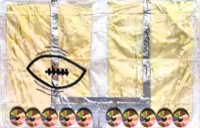
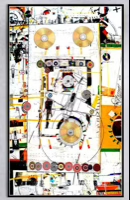
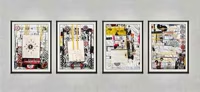
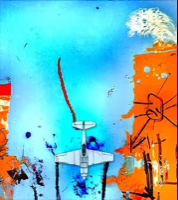
232 works, 1990–2020. Collage, primarily. The recurring elements are compact discs, targets, and warplanes — concentric rings laid against black, red, white, yellow. The planes are drawn from above or from the side, reduced to diagrams. The discs function as bullseyes, as roundels, as shields. American footballs appear. Chess pieces. The compositions tend toward the panoramic: figures scattered across a wide ground, or arranged in friezes. The work is not anti-war. It doesn't illustrate anything. It uses the vocabulary of conflict — ordnance, insignia, game pieces, sport — and holds them flat, side by side, in the grammar of collage.
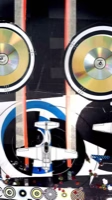
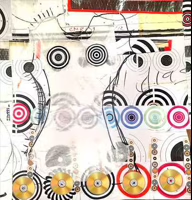
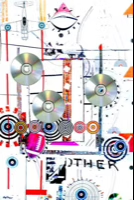
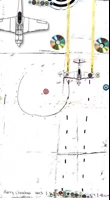
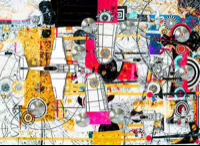
Concentric rings, bull's-eye forms, and range markers appear across dozens of works as compositional anchors and loaded symbols. Precision without declared purpose. The target as both invitation and warning — a form that compels attention before meaning is assigned.
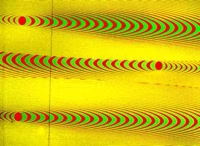
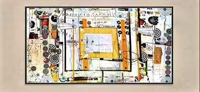
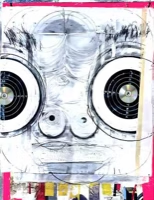
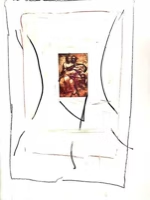
Works conceived with framing as an integral compositional element — the frame not as neutral container but as collaborator. Edge and interior in negotiation; the boundary of the work as part of the work itself.
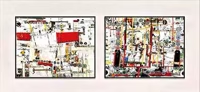
Photographic fragments of the human body — cropped, magnified, repositioned — set against grounds that compete with and complement the figure. Presence through reduction; the body as found material, as much subject as surface.
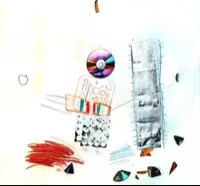
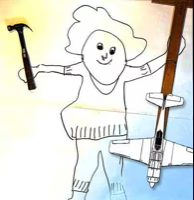
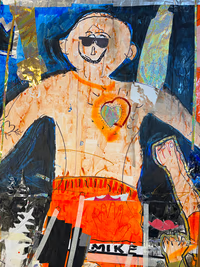
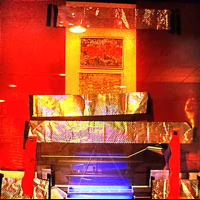
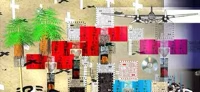
Exhibition views and installation photographs from five decades of showing work. The archive of the archive: spaces, arrangements, and the accumulated evidence of a practice made public and encountered by other eyes.
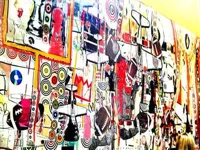
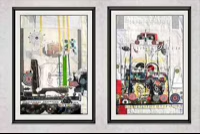
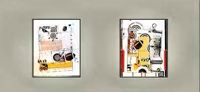
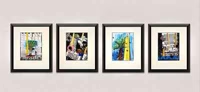
Works photographed in the context of the studio — process images, studies in available light, and the raw material of practice before it becomes exhibition. The space where everything starts, documented at various stages of arrival.
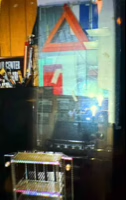
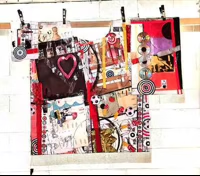

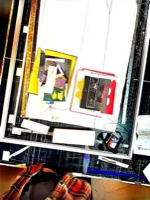
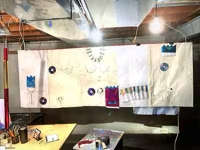
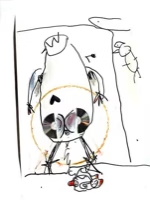
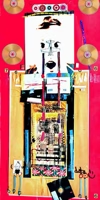
A recurring figure — part totem, part pop effigy — assembled from the residue of consumer culture. Across more than a hundred works spanning five decades, the Snowmann shape-shifts and accumulates: a sustained riff on American iconography, assembly, and the act of making something from nothing.
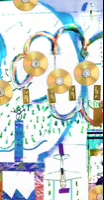
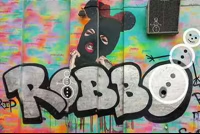
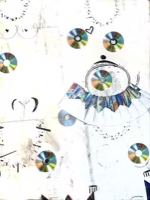
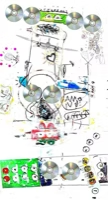
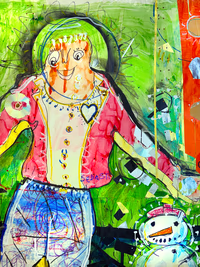
The cross reduced to its geometry — symmetry, perpendicular meeting, four directions held in tension. Form that carries cultural weight before any specific reading is applied, returned to pure structure and asked to hold whatever the viewer brings.
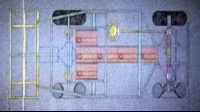
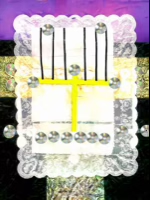
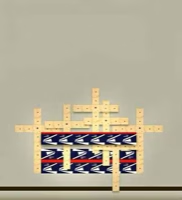
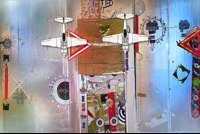
Work made during and around the BFA years at the Cleveland Institute of Art. The foundation built here — printmaking, industrial drawing, material thinking — runs under everything that came after. These pieces catch the practice at the moment of formation: uncertain in the best way, searching, not yet committed to what it would become.


Works made in collaboration with other artists — shared process, dual authorship, two practices finding common ground.

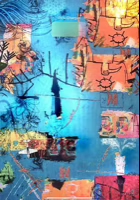
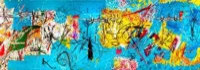
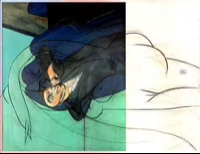
Works built from the act of tracing — contour drawn over found imagery, line extracted from photograph or print. A method of close looking that is also a method of possession: the original image remains visible beneath the intervention, neither fully surrendered nor entirely replaced.