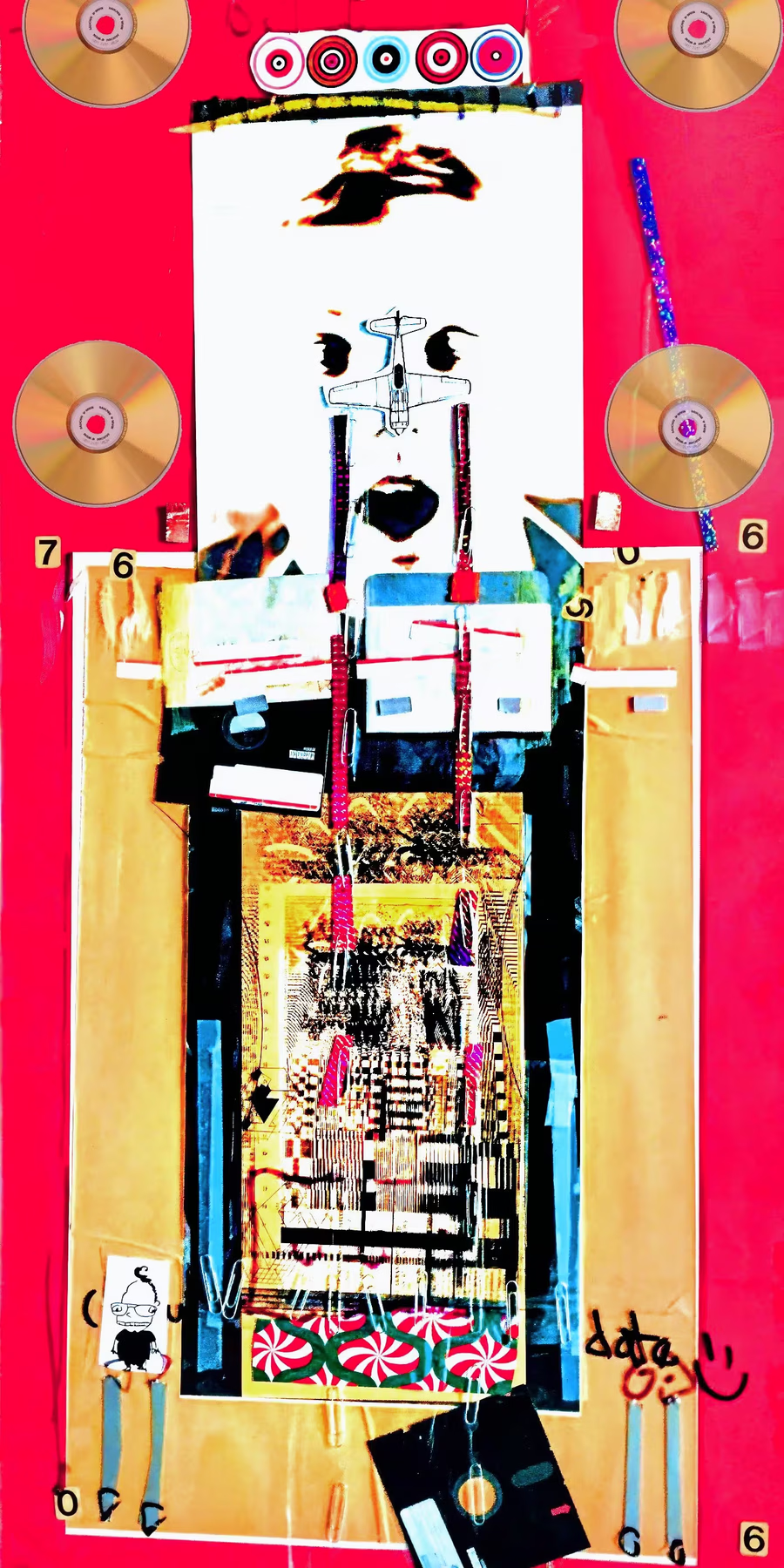
About Me — Jeffrey F. S. Neumann
Born 1955, Cleveland, Ohio · Visual artist & designer · Fifty years of making
“I directed this archive but I didn’t write most of it. The essays here were drafted with AI to my instruction, and I approved them. Where you see quotation marks, those are my words.”
Five Decades of Practice: Milestones & Inflection Points
1,087 indexed plates · 5 eras-
1974–1978
Cleveland Institute of Art & Prism Paper
Foundations & licenseBFA studies across industrial design, graphic design, and painting. Discovery of prism paper reflections and Rauschenberg’s radical philosophical license: found industrial material holds equivalent validity to oil and canvas. Earliest architectural blueprints and ink overlays recorded.
- Degree: BFA 1978
- Key medium: prism paper & cardstock
- 57 works dated to the 1970s (est.)
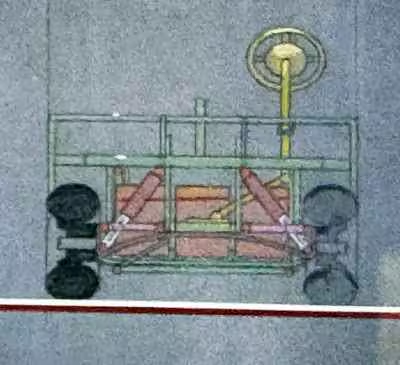 Untitled (Warplane Top-Down)Pl. 1,022 · 1970s (est.)
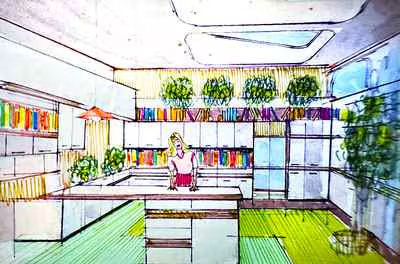 Interior Library PerspectivePl. 1,032 · 1970s (est.)
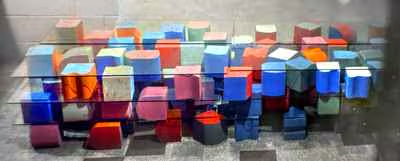 Blocks Under GlassPl. 1,046 · 1970s (est.)
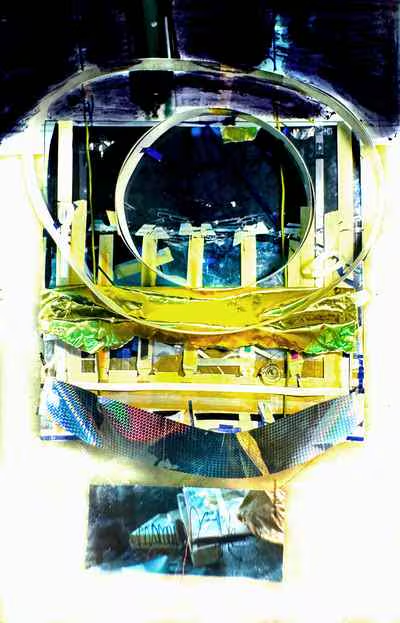 Untitled (Assembled Apparatus)Pl. 1,060 · 1970s (est.)
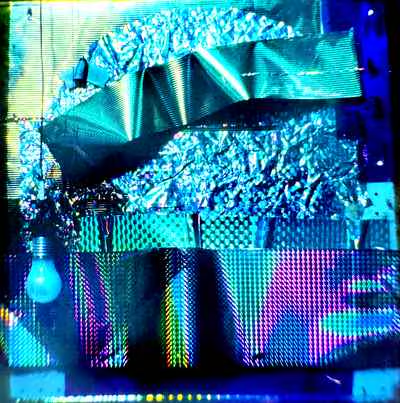 Untitled (Foil and Light)Pl. 1,075 · 1970s (est.)
Five of the catalogue's 1970s works, taken at even intervals across them in catalogue order. Composites are left out, and every date is a decade estimate. -
1980s
The Studio in the Margins
Night & weekend practiceNavigating the demands of a commercial design career while preserving an autonomous evening studio practice in Cleveland. Strict refusal of commercial gallery circuits; works executed on industrial board, high-contrast photocopies, and acrylic washes.
- Modus: solitary studio
- Focus: geometric aggregates & photomontage
- 12 works dated to the 1980s (est.)
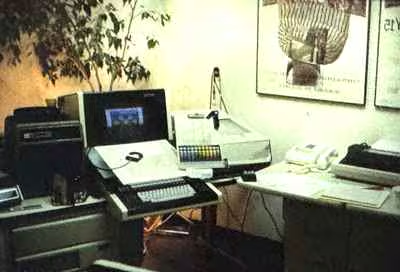 Untitled (Studio Workspace) 2Pl. 1,034 · 1980s (est.)
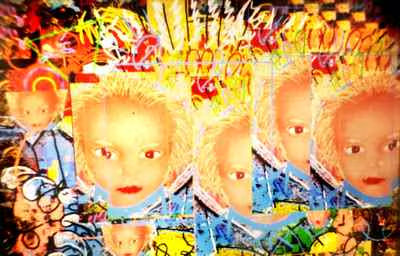 Repeated Doll FacesPl. 1,052 · 1980s (est.)
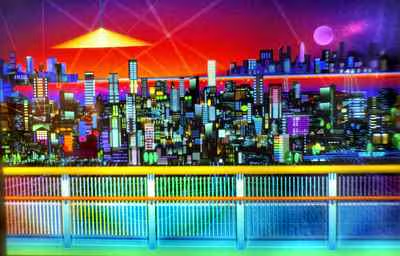 Neon City SkylinePl. 1,064 · 1980s (est.)
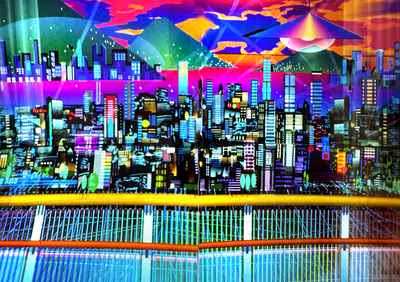 Neon City NocturnePl. 1,069 · 1980s (est.)
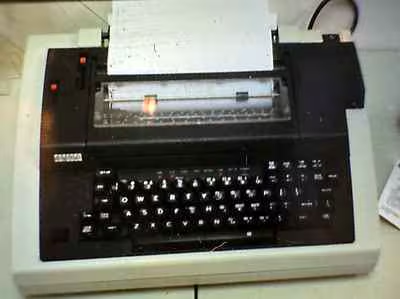 Untitled (Electric Typewriter)Pl. 1,082 · 1980s (est.)
Five of the catalogue's 1980s works, taken at even intervals across them in catalogue order. Composites are left out, and every date is a decade estimate. -
1990s
Debris of the Machine Age
Post-industrial relicsDirect absorption of discarded digital media: shattered compact discs, typewriter ribbons, floppy disk chassis, and CRT monitor glass. Inception of the monumental 30-year Guernica deconstruction series, translating Picasso’s anti-war lexicon into post-industrial Cleveland refuse.
- Initiation: Guernica suite
- Components: compact discs, floppy disks, vinyl
- 192 works dated to the 1990s (est.)
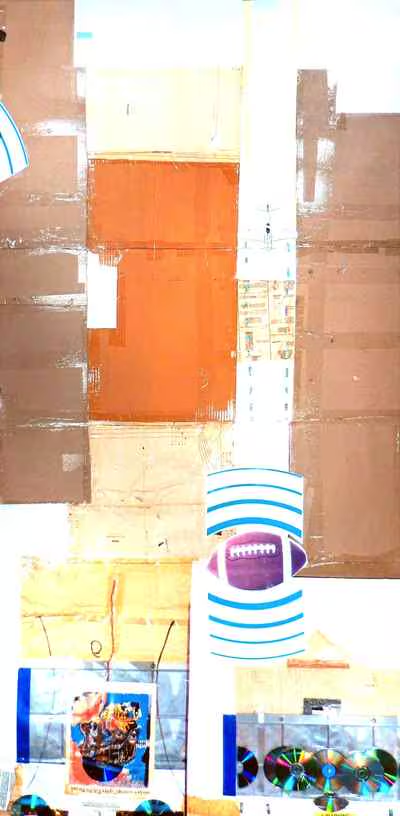 Cardboard FieldPl. 44 · 1990s (est.)
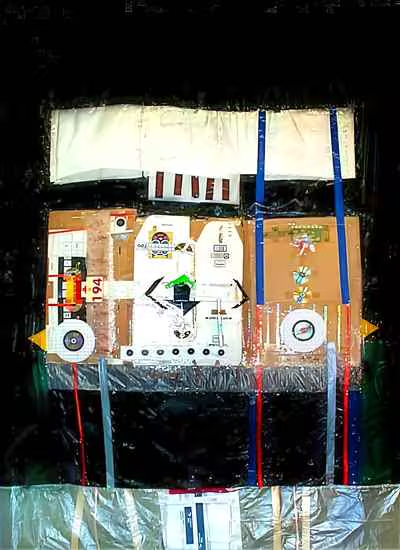 Untitled (Mixed Panel 194)Pl. 243 · 1990s (est.)
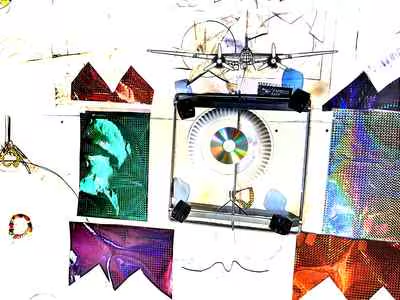 Untitled (Express Mail Assemblage)Pl. 377 · 1990s (est.)
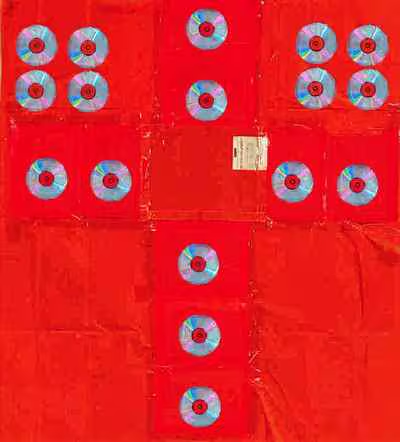 Red Cross with DiscsPl. 673 · 1990s (est.)
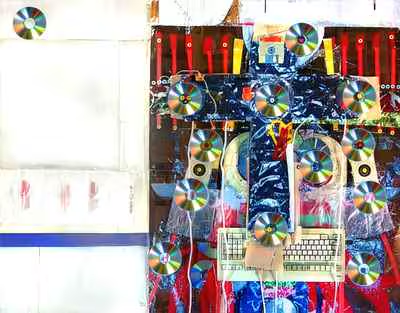 Disc Array with KeyboardPl. 983 · 1990s (est.)
Five of the catalogue's 1990s works, taken at even intervals across them in catalogue order. Composites are left out, and every date is a decade estimate. -
2000s
The Flooded Wing & Dispersal
Catastrophic lossA devastating studio water pipe rupture compounded by pest damage led to the destruction and unrecoverable loss of an estimated 500 to 1,000 uncatalogued collages and assemblages. The catastrophe spurred the necessity of photographic negative scanning and defensive digital preservation.
- Loss register: ~500–1,000 discarded
- Turn: archival inception
- 273 works dated to the 2000s (est.)
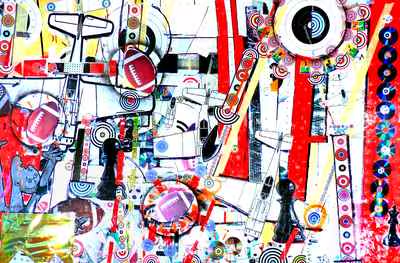 Untitled (Dense Field)Pl. 49 · 2000s (est.)
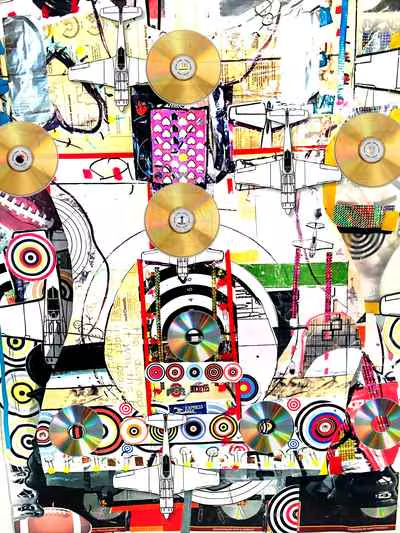 Squadron and Disc CrownPl. 109 · 2000s (est.)
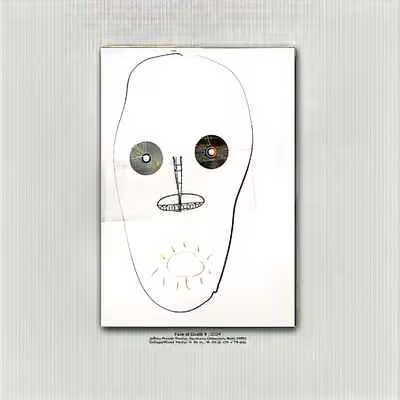 Face of Death VPl. 582 · 2000s (est.)
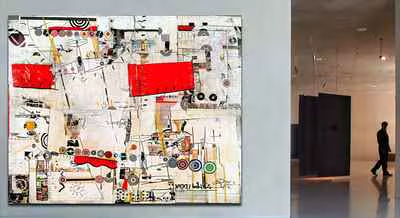 Untitled (Concentric Targets, Red)Pl. 823 · 2000s (est.)
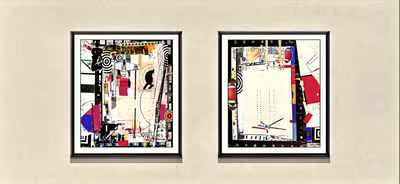 Diptych (Framed Collages)Pl. 918 · 2000s (est.)
Five of the catalogue's 2000s works, taken at even intervals across them in catalogue order. Composites are left out, and every date is a decade estimate. -
2010s–2020s
Mr. Snowmann & The Grandchildren
Living monographMaking alongside his grandchildren: sculptural studies including the London vitrine intervention (Mr. Snowmann), and collaborative studio experiments. The creation and institutional execution of the digital catalogue raisonné, establishing an immutable public ledger for future generations.
- Raisonné build: 2026
- Plates: 1,087 indexed, 159 of them composites
- Current status: active studio practice
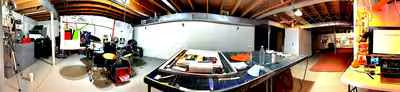 Untitled (Studio Panorama) 2Pl. 163 · 2020s (est.)
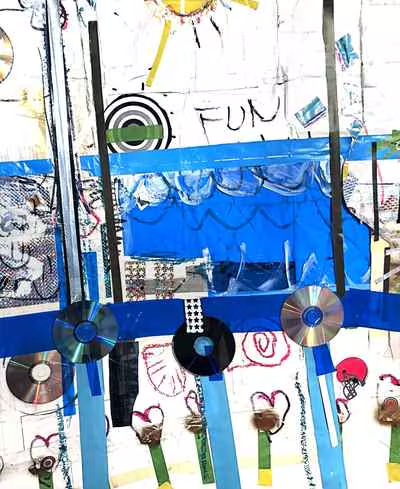 Fun with DiscsPl. 333 · 2010s (est.)
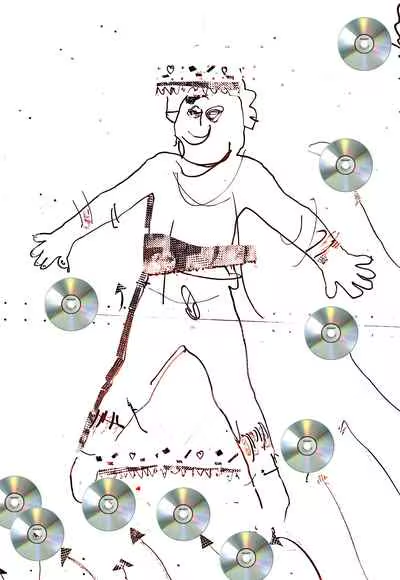 Figure Orbited by DiscsPl. 462 · 2020s (est.)
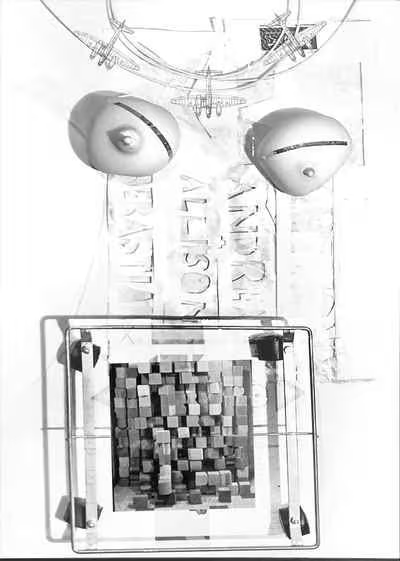 Untitled (Torso with Planes)Pl. 576 · 2020s (est.)
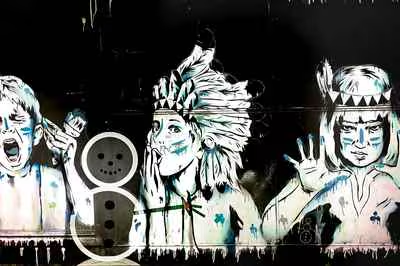 Three Children in HeaddressPl. 757 · 2010s (est.)
Five of the catalogue's 2010s and 2020s works, taken at even intervals across them in catalogue order. Composites are left out, and every date is a decade estimate.
The Cleveland Trajectory & Fifty Years of Making
The corpus grew to over 1,000 objects: photographs on paper, vinyl, fabric, and wood; collages of xeroxed and found images; sculptural installations; and documentation of works that were never shown anywhere but in his practice.
He pulled directly from the physical margins of urban American manufacture: industrial prism paper, discarded compact discs, disemboweled typewriter and computer keyboards, dollar store ephemera, and heavy cardstock.
The archive records fifty years of making—from the earliest untitled figure studies on red ground to the most recent body of work. It is not a retrospective but a complete accounting: 1,087 works indexed, 159 flagged as composites (imagined exhibitions), and the data honest about what is known and what was never recorded.
- Indexed works
- 1,087
- Spanning 1974–2026
- Imagined composites
- 159
- Flagged with dashed rules
- Photographs
- 328
- Catalogued as photographs
Verified Physical Exhibitions (1978–2012)
The verified public record comprises precisely six physical exhibitions. In sharp contrast stand the 159 imagined gallery compositions documented throughout the catalogue raisonné—spaces constructed inside the studio camera.
| Year | Institution / venue | Format | Archival status |
|---|---|---|---|
| 1978 | Cleveland Institute of Art | Student Exhibition | Verified record |
| 2003 | Cleveland Center for Contemporary Art | Group Exhibition | Verified record |
| 2006 | Waterloo Arts | Two-Person Exhibition | Verified record |
| 2008 | Grumpy’s Café | Solo Exhibition | Verified record |
| 2009 | 78th Street Studios | Group Exhibition | Verified record |
| 2012 | Plain Arts Gallery | Group Exhibition | Verified record |
A Personal Record, Not A Sales History
The Museum That Never Existed is a catalogue raisonné of his complete practice. It is not a museum, not a commercial gallery, not an art school portfolio. It is a personal record—built for his family, particularly his grandchildren, to understand who he is and what fifty years of continuous making meant.
The catalog titles, descriptions, materials, and color palettes were written by software; see the notes on each plate.
The archive makes no claim to false certainty. 1,084 of the 1,087 dates are decade estimates. Dimensions are estimated for 21 of the 1,087 works, from photographs, never measured directly; see To Scale. Locations are recorded for none.
Beyond the 1,087 cataloged plates lies an estimated 500 to 1,000 lost or discarded works: abandoned collages, decomposed vinyl, and untracked assemblages. Stated plainly rather than reconstructed with synthetic guesswork. Read the Register of Loss.
Archive construction
This archive was built from May 26, 2026 onward. The construction history recorded here runs to October 17, 2026 and holds 3,764 dated commits: every change to the data, every fix, every design decision. For a grandchild in 2050: you can see exactly when this was made, and what changed.
- 672765eCatalogue: 44px touch targets for filter and decade chips on phones2026-10-17
- cb651f9Favorites: fix horizontal overflow at 200% zoom; to-scale: life-size status no longer claims exact inches2026-10-17
- f507ec7Record pages: show Materials as Not recorded when unknown (120 works)2026-10-17
- 3c48593Data-honesty batch: fold lost.html into Register, cut Stories software-voice lines, soften About claims2026-10-17
- 8dfe698Restamp footer.js version on record pages2026-10-17
“The Press” & Honest Accessibility
Catalogue Raisonné on Screen
Black obsidian ground, hairline framing, warm gold accents (#D4AF37) mirroring printer’s brass marks. Navigation moves like turning physical monograph leaves—avoiding dizzying parallax, scroll hijacking, and gratuitous animation. Motion is kept slow and in service of the plates.
Dashed border = 159 composite platesPlate-Level Discrepancy
Nine works carry Jeff’s own words on the record page, including Buy Me (Targets and Planes).
Catalogue ref: art0518Documented Incompleteness
Primary controls aim for a 44px touch target, though some smaller ones remain. Motion is reduced for anyone whose system requests it. Keyboard focus rings are crisp curatorial gold. Frankly acknowledged: no screen reader has walked every page end to end, and machine-generated alt text varies in depth across the 1,087 plates.
Accessibility statementThe Colophon
The design improves as the data improves. When dimensions are recorded, dimensions will appear. When locations are known, locations will appear. The dashed “not recorded” frame will fade as the archive becomes more complete. This site was designed and built by Jeffrey F. S. Neumann using hand-authored HTML, CSS, and JavaScript, with no frameworks. Technical details are on the Colophon page, and the source code is on GitHub.
The Record, Plainly Stated.
The artist. This archive. Design principles. The colophon. How to browse it. Select a portal below to enter the collection.