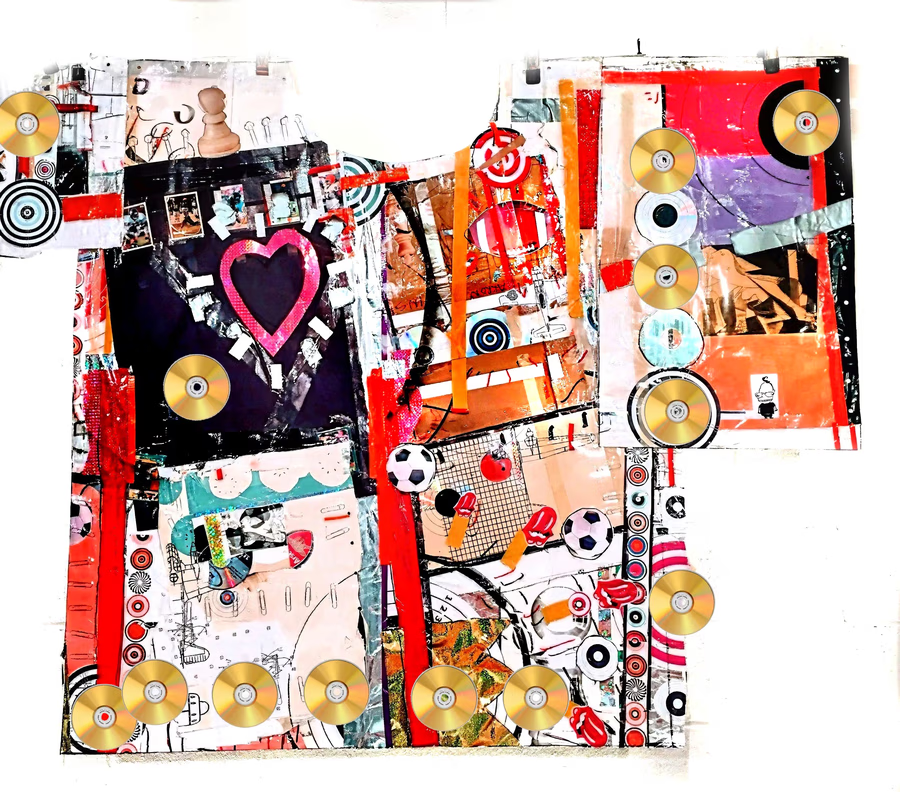
The Stories That Were Mine
Jeffrey F. S. Neumann · Born 1955, Cleveland, Ohio · Fifty years of making
Twelve sections of testimony, recorded and transcribed in 2026. 194 words below are his, verbatim — everything set in quotation marks and set large. Everything else is connective prose, written by software to place his words in order, set smaller and grey so it is never mistaken for his voice. This is fifty years of making, told the way he actually told it.
The Beginning
Cleveland Institute of Art · period not stated in testimony
Rauschenberg was on the walls. The idea that found material was as valid as paint.
The Rauschenberg Realization
A realization that came slowly, over decades — no fixed place or date given in testimony
Over decades, he discovered that Robert Rauschenberg had already explored much of the territory he thought was his own. This was not a single moment. It crept in slowly — through books, research, exposure over time.
The realization: the work he was making was not groundbreaking. Someone had already been there.
This did not stop him.
Why He Kept Going
Place and period not stated in testimony — described as a belief held constantly, not tied to one moment
The most important unanswered question in the archive: Why did he keep going after the Rauschenberg realization?
Not external validation. Just knowing himself.
This belief sustains one work directly: “Buy Me (Targets and Planes)” carries his own voice as annotation — “not selling anything / trying to” — in direct contradiction to its title.
Thirty Years at the Margins
Career and family years · period not stated
Marriage. Children. Bills. Career as a designer and creative director. The studio work moved to the gaps — evenings, weekends, whatever time was left.
CDs. Computer floppies. Keyboards. Dollar store finds. Tape. Prism paper from school that he never stopped loving. Things that still had a life left in them.
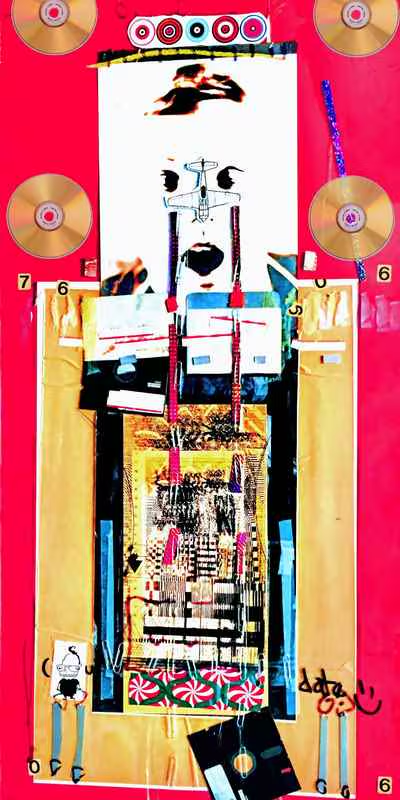 Untitled (Figure, Red Ground)Pl. 1 · 1980s (est.)
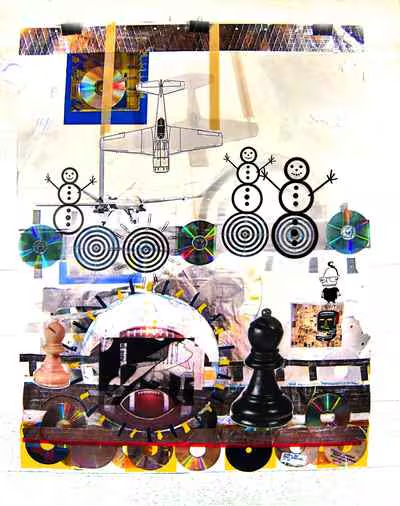 Untitled (Snowmen, Planes, Pawns)Pl. 572 · 1990s (est.)
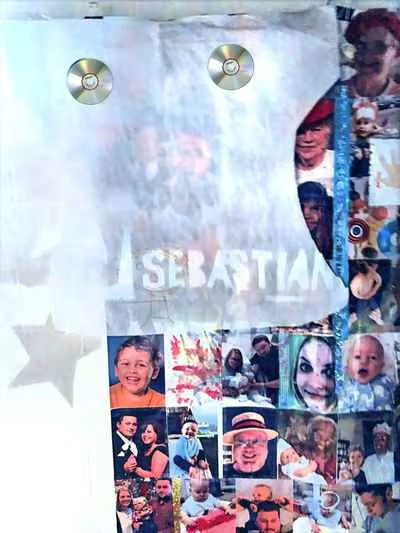 Sebastian (Portrait Collage)Pl. 187 · 2010s (est.)
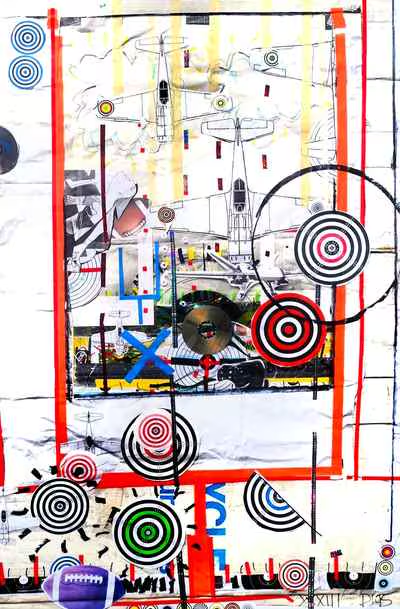 Targets and Formation 2Pl. 373 · 2010s (est.)
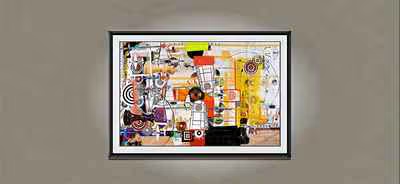 Untitled (Dense Mixed Collage)Pl. 760 · 2010s (est.)
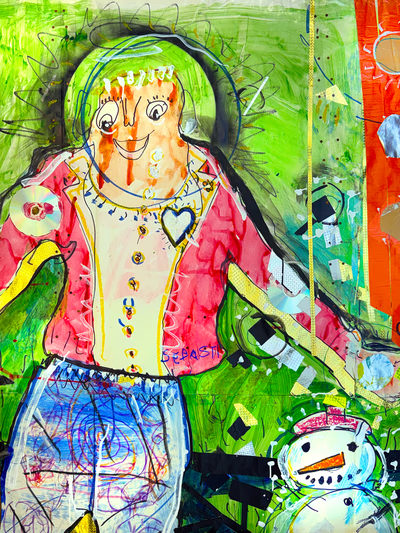 Sebastian and the SnowmanPl. 1,087 · 2020s (est.)
Nothing Finishes
Not tied to a specific place or period in testimony — described as structural to how he works, not a moment
When asked whether he ever finished a piece and thought it wasn’t good:
Nothing receives a final verdict. The option to return is always open.
One Direction, Thirty Years
1990–2020
He read a book about Picasso making Guernica. He considered it the most important painting of the twentieth century. He used it as a direction. A structure to work against. The series ran for thirty years and produced 232 works. He is still reworking old Guernica pieces today.
Why Guernica specifically, over thirty years, remains unknown. This deserves its own conversation.
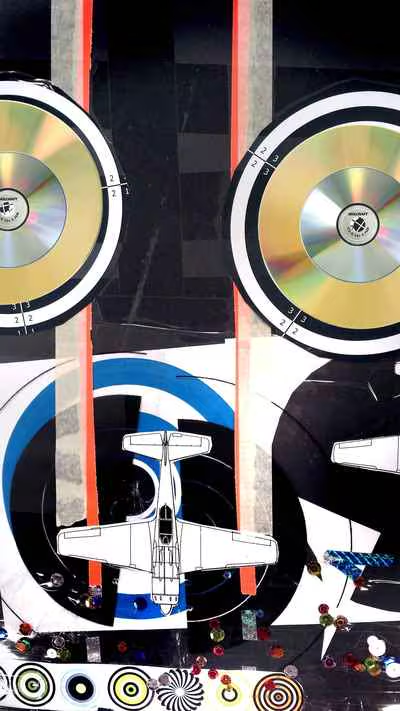 SortiePl. 3 · 1990s (est.)
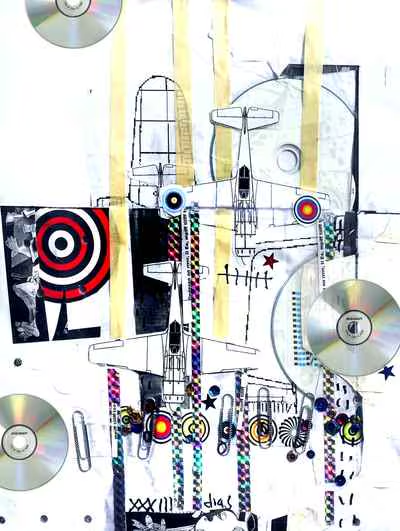 XXXIII Dias FormationPl. 993 · 1990s (est.)
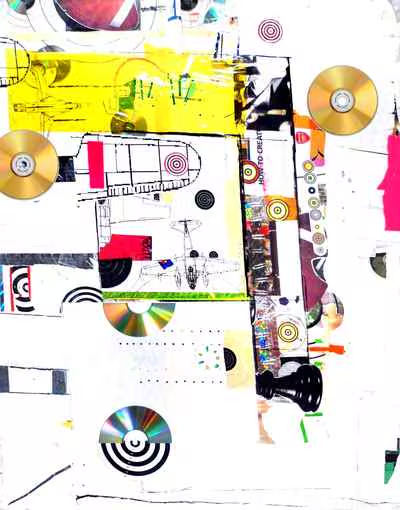 Yellow Inset, How to CreatePl. 96 · 2000s (est.)
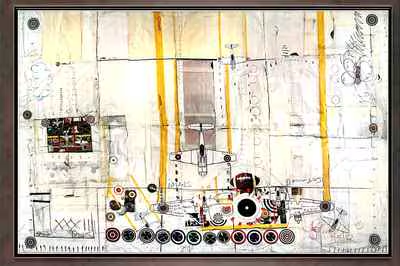 Untitled (Warplane Formation) 3Pl. 849 · 2000s (est.)
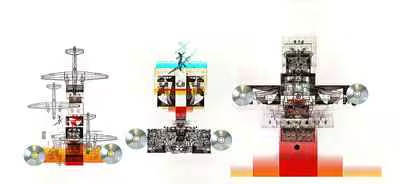 Guernica Triptych FormationPl. 480 · 2010s (est.)
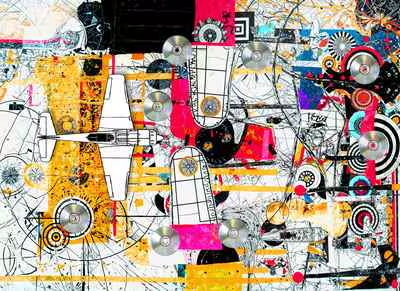 Untitled (Planes and Discs) 3Pl. 1,012 · 2020s (est.)
Context, not testimony
On 26 April 1937, the Basque town of Guernica was bombed by German and Italian aircraft during the Spanish Civil War, in support of Francisco Franco’s Nationalist forces — one of the first aerial bombings of a European civilian population, and an act that shocked international opinion at the time. Picasso’s mural, completed later that year for the Paris World’s Fair, was his response. Jeff’s own series takes its name and reference from the painting, not from the bombing directly — his testimony above is about what the artwork gave him as “a structure to work against,” not an account of the historical event itself. Casualty estimates for the bombing vary widely between sources and remain disputed; none is stated here for that reason.
What Didn’t Survive
Storage location and date not recorded
A friend called. Jeff went to see if he could save anything. He was told to stay away — bed bugs. He saw the work on the curb.
No inventory. No photographs of most of them. No record. An estimated 500 to 1,000 works disappeared. Some exist now only in a single photograph.
Why This Archive Exists
Cleveland · since retirement, c. 2020
After retirement, he started wondering whether any of it mattered. Whether anyone would want to see it. That wondering led here — 1,087 works, fifty years, as much of it as could be saved.
Built so his daughters’ families would know what existed, including the pieces that are only in one photograph now.
Getting Hard to Tell
Approximately the last four years
For the past four years, his grandchildren have been making alongside him. Their drawings end up in pieces. The boundary between contributions has become unclear.
What He Wants a Grandchild to Know
Not tied to a specific place or period in testimony
The physical experience of scale — every work together, in one room. That is what he wants them to know.
The room does not exist. One Space is the closest this archive can get: all 1,087 surviving works on a single plane, at once.
Made with a grandson
Sebastian · v1 · 2018–2020
Between 2018 and 2020 he made a website with his grandson, Sebastian. Its sections were Legos, K’nex, Aquabeads, Tutorials and Miscellaneous. These photographs come from the first three.
None of it is in the catalogue. Two plates carry Sebastian’s name — Pl. 187 and Pl. 1,087 — and the rest of what the two of them made is kept as it was, on the site itself.
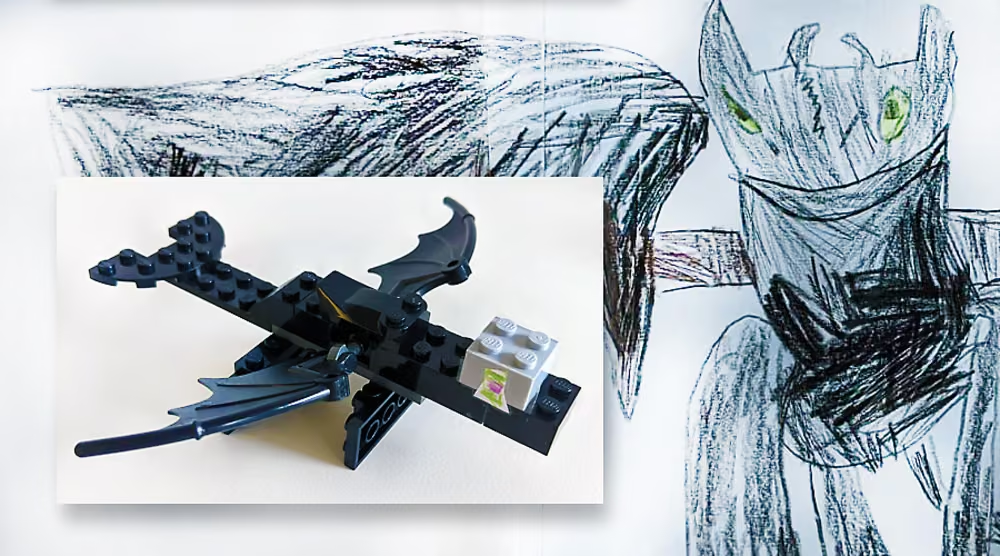 Dragon team: ToothlessLegos page · 2018–2020
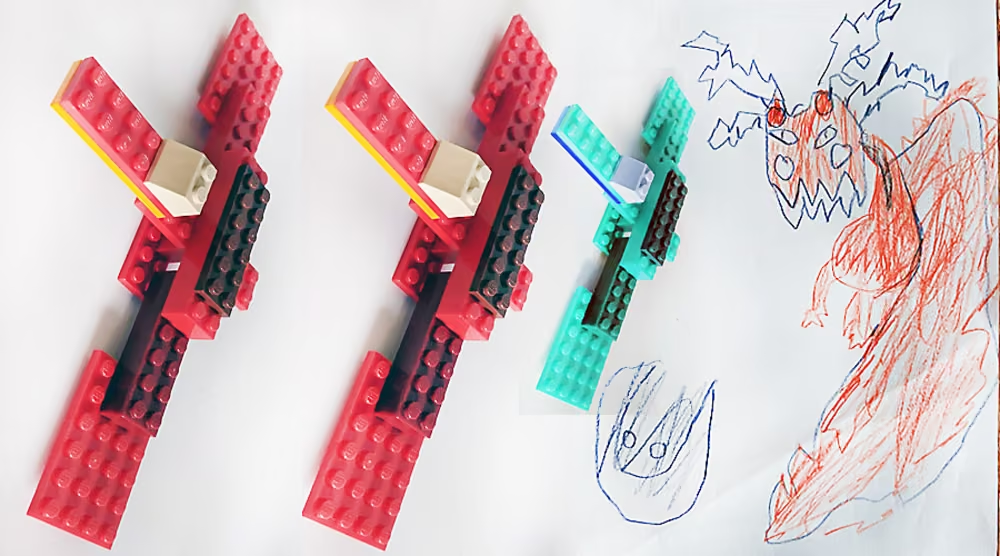 A drawing beside a Lego buildLegos page · 2018–2020
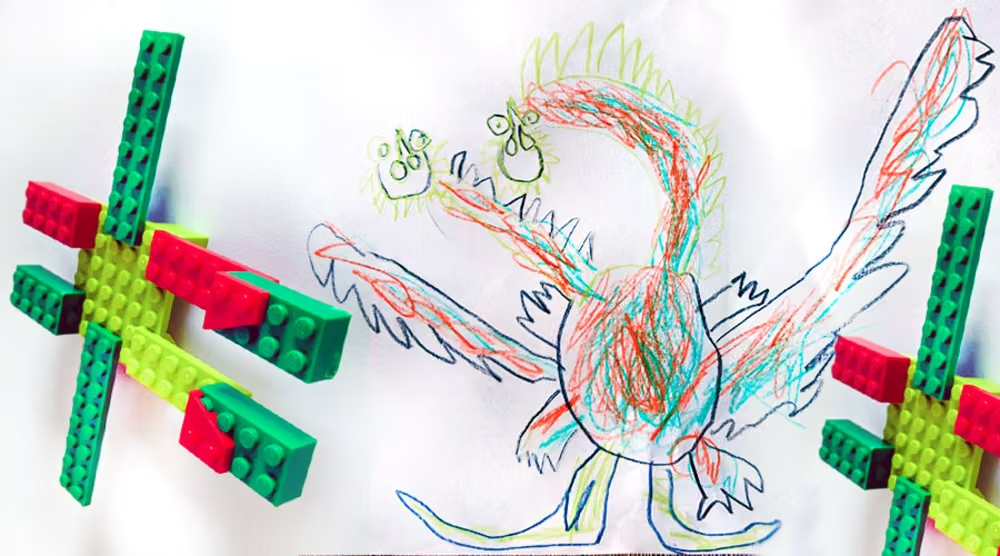 A drawing beside a Lego buildLegos page · 2018–2020
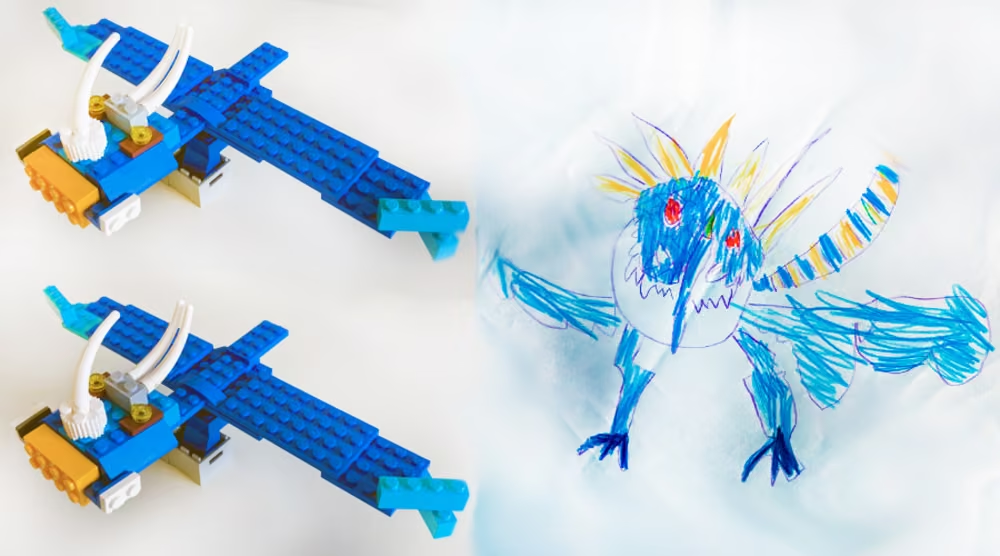 A drawing beside a Lego buildLegos page · 2018–2020
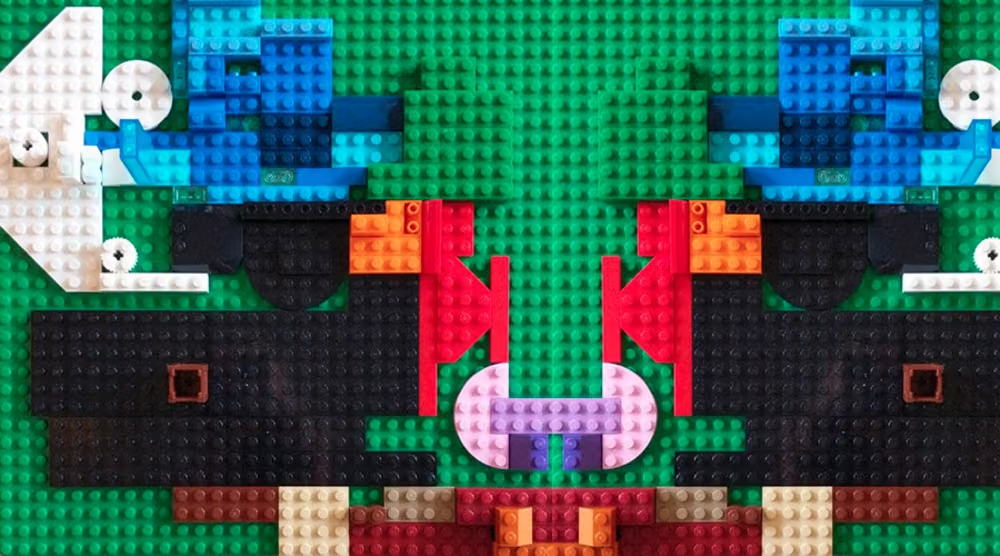 LegoLegos page · 2018–2020
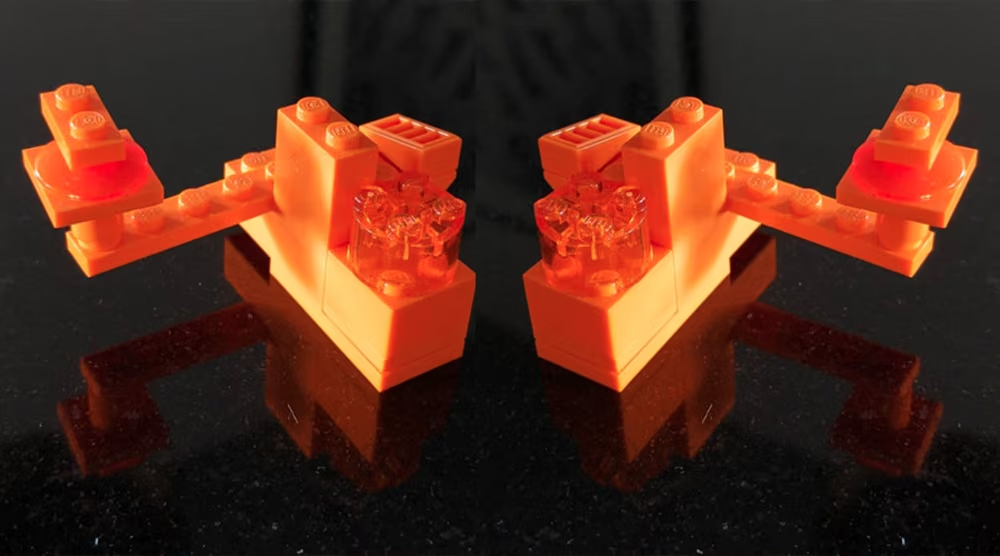 LegoLegos page · 2018–2020
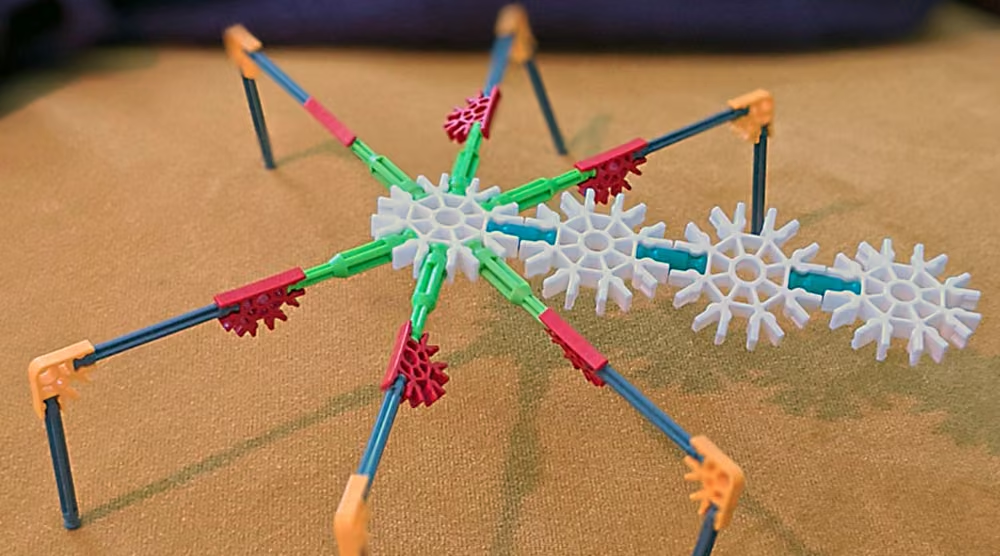 K’nexK’nex page · 2018–2020
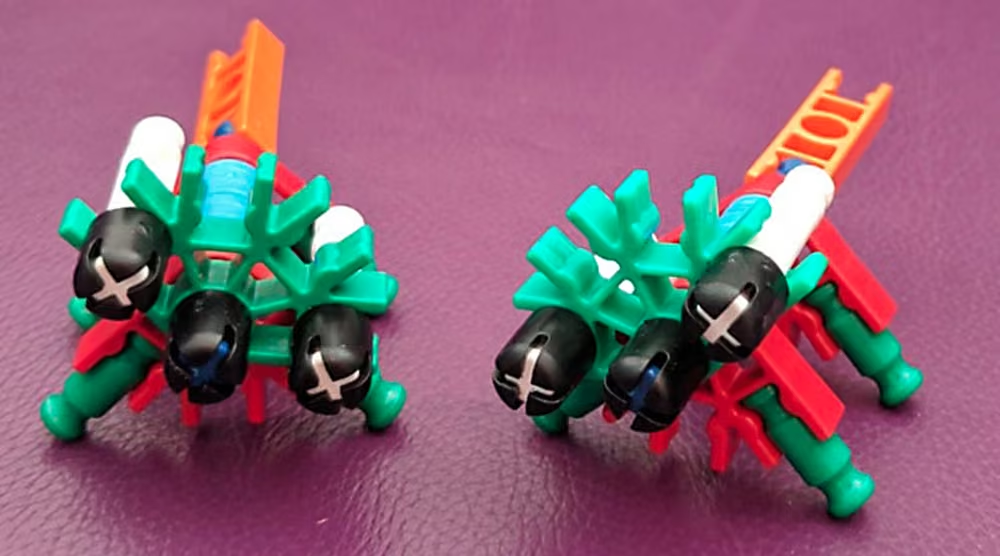 K’nexK’nex page · 2018–2020
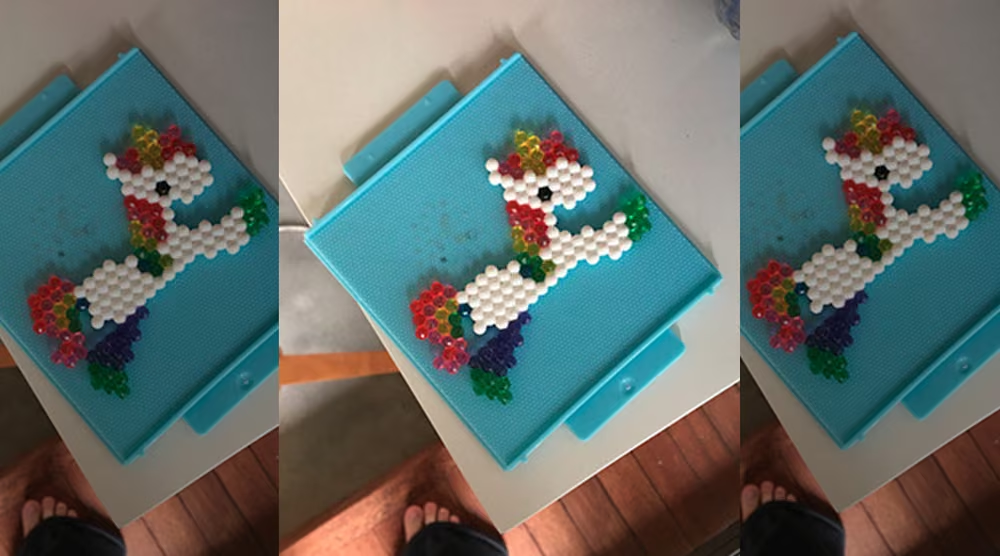 AquabeadsAquabeads page · 2018–2020
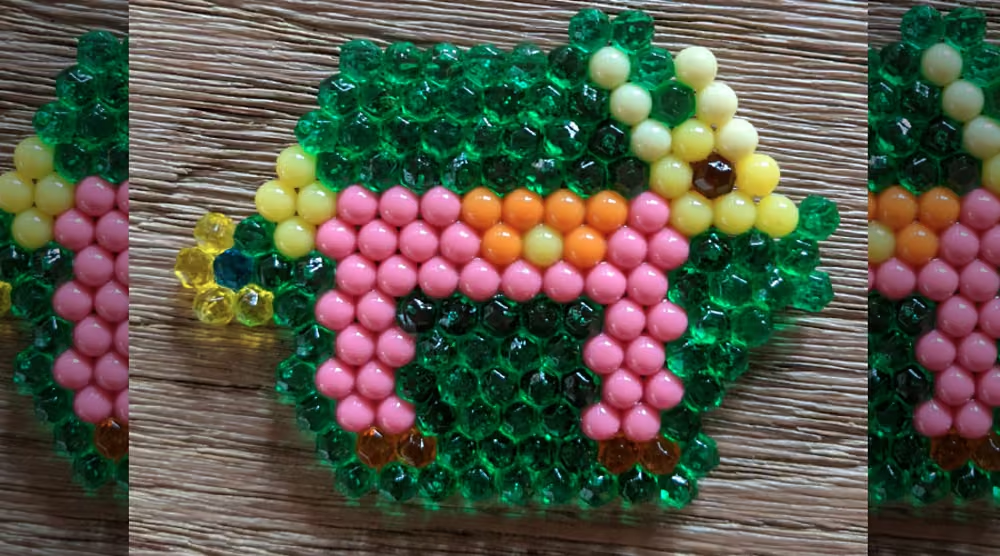 AquabeadsAquabeads page · 2018–2020
A Specific Lost Work
Cleveland Institute of Art · late 1970s
One work he described in detail. A sculpture, made at the Cleveland Institute of Art in the late 1970s: prism paper applied to sections of iron gridwork found in a junkyard, with something torn from a magazine worked in. About 38 inches wide, 24 tall and 3 to 4 deep. It hung on a wall. It was shown at a student show, and it sold.
No image of it exists. Someone has lived with this piece for nearly fifty years, and he does not know where it is.
Still Making. Still in Cleveland.
Cleveland, Ohio · now
He lives in Cleveland, Ohio, and is still making work most days.
What making things meant to him — the full answer to why he kept going — remains to be asked. The sessions are ongoing.
Working History — the sites he built himself, still standing →